|
We now have a few photos/bits of information on British
troops stationed in and around Burton Bradstock. We know that
there were British Commandos - but don't know who they were.
Hopefully, readers might come up with some more information
on them? We hope this is just the beginning of our research.
The Essex Regiment & the Durham Light Infantry:
In October, 1940, the 9th Essex Regiment took over
from the Durham Regiment at West Bay. (The Essex Regiment
moved in October 1941 to Dawlish Warren and then on to Teignmouth
around Christmas 1941.)
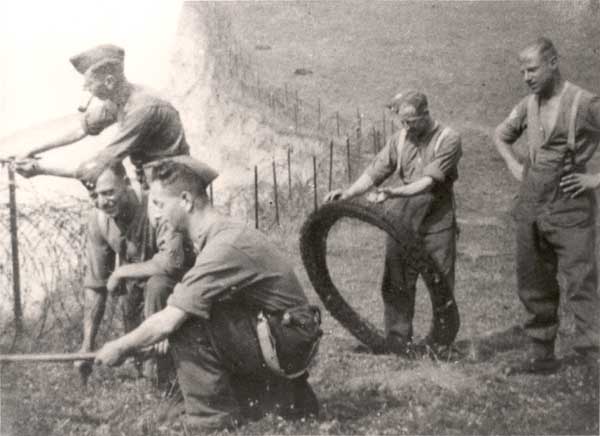
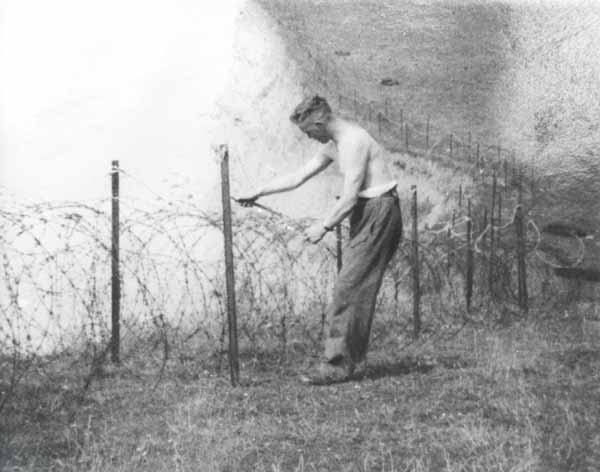
The defence of West Bay consisted of minefields from West
Cliff down to the road.The minefields were protected by barbed
wire, and beyond the barbed wire on East Cliff was the golf
course.
In the event of an invasion, the road out of West Bay was mined
and artillery from inland would have shelled the
beach. In addition, a unit of artillery was
positioned on West Cliff itself, in a bungalow which
had been reinforced with concrete!
___________________________________________________________________________________
Some photos of British Soldiers
while at and near Burton Bradstock - believed to be from the Essex Regiment.
Photos believed to be by C. Cauldrey.
Text was attached to each photo.
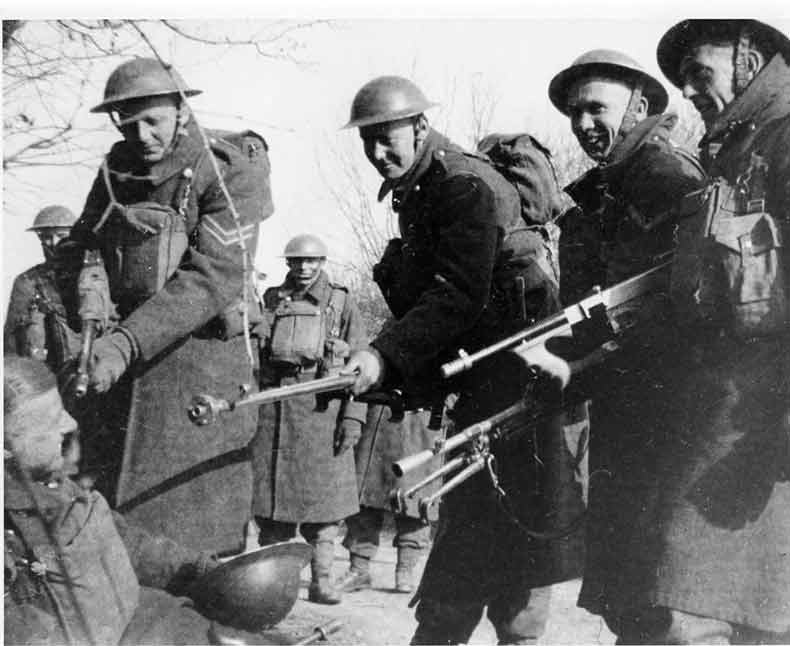
Devereux on the spot. Lt. Telfer (Thompson) Hawkins
(Boyes AIT Rifle) Topham (Bren gun) Stanton (Thompson).
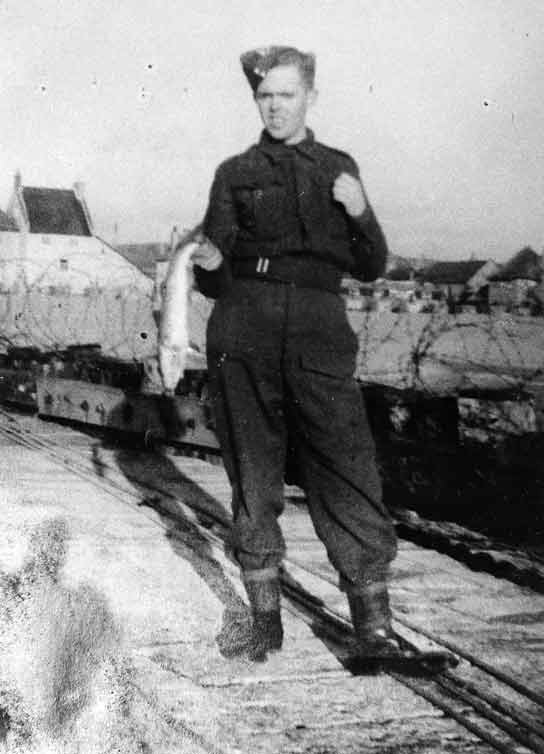 Self. Finally caught a fish! (C. Cauldrey))
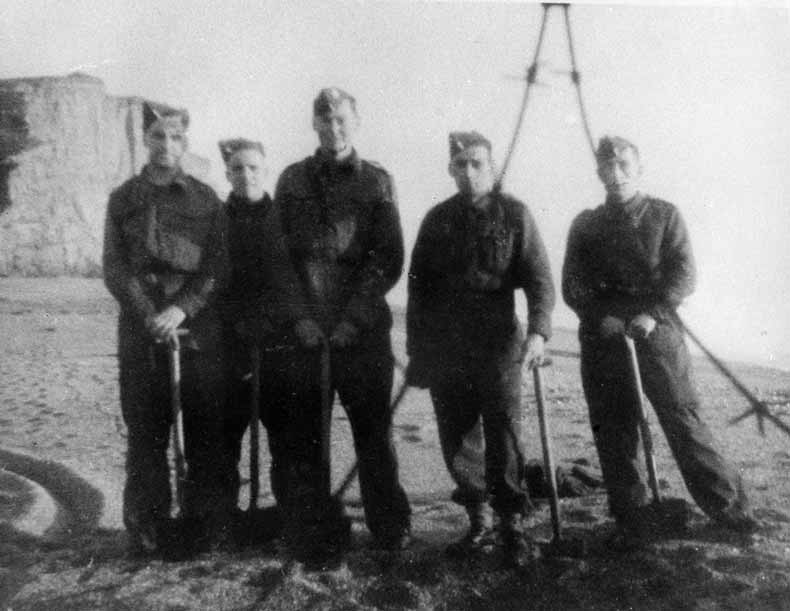
Filling sandbags - Kernsley, ?, Hawkins, Gregory,
Head.
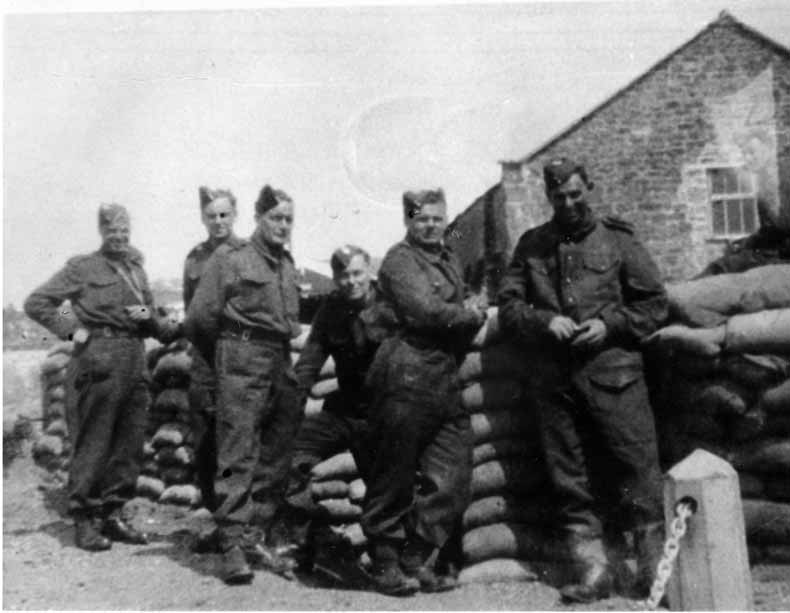
Building a strong point - Devereux, Kernsley, Higby,
Hawkins, Danasavage, Huckle.
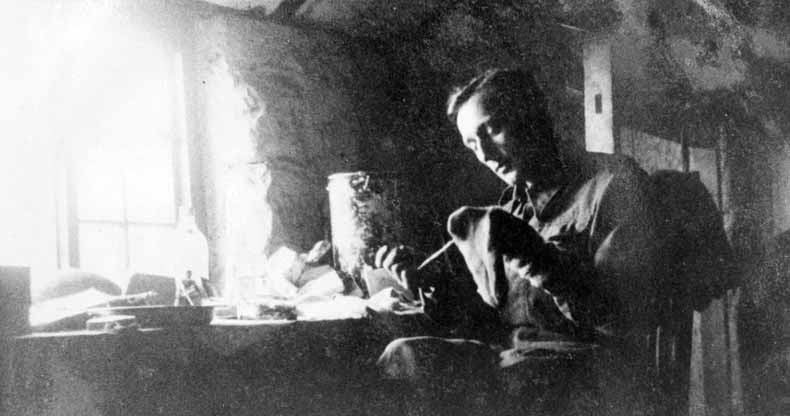
George Head does a bit of "make do and mend"
in the Guard Room somewhere near the George Inn.
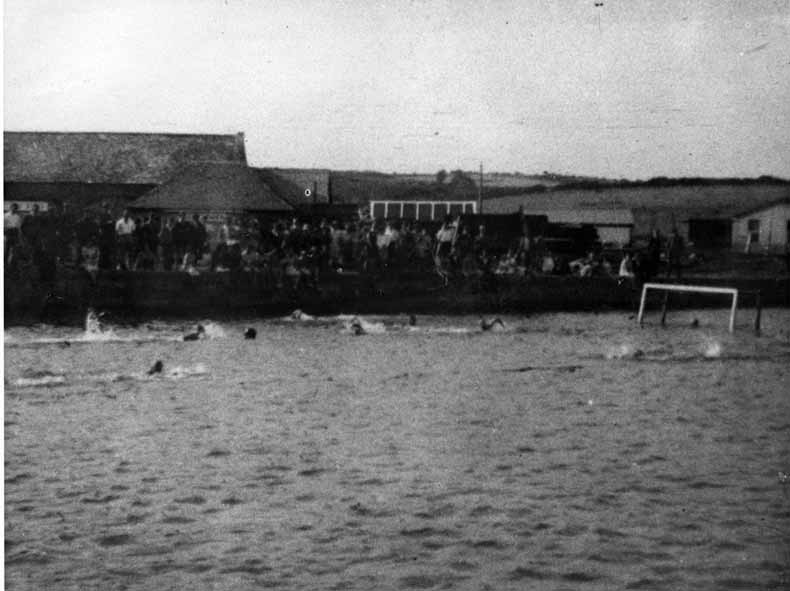
Water Polo. I believe the only team we beat was
the Bridport Mermaids (6th Formers?)
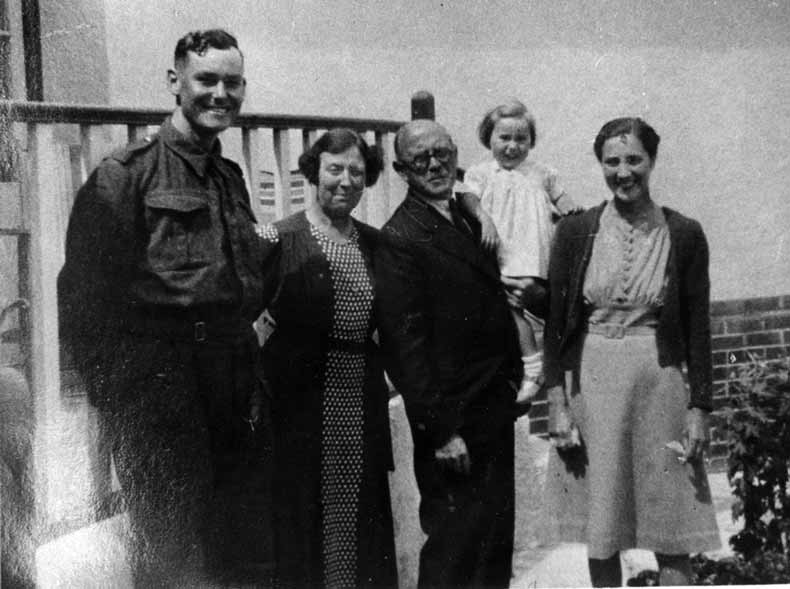
Mr. & Mrs. Mister (with daughter & granddaughter)
of "Westways" on West Cliff. The Misters
entertained some soldiers for coffee and sandwiches.
Ted Hawkins is on the left.
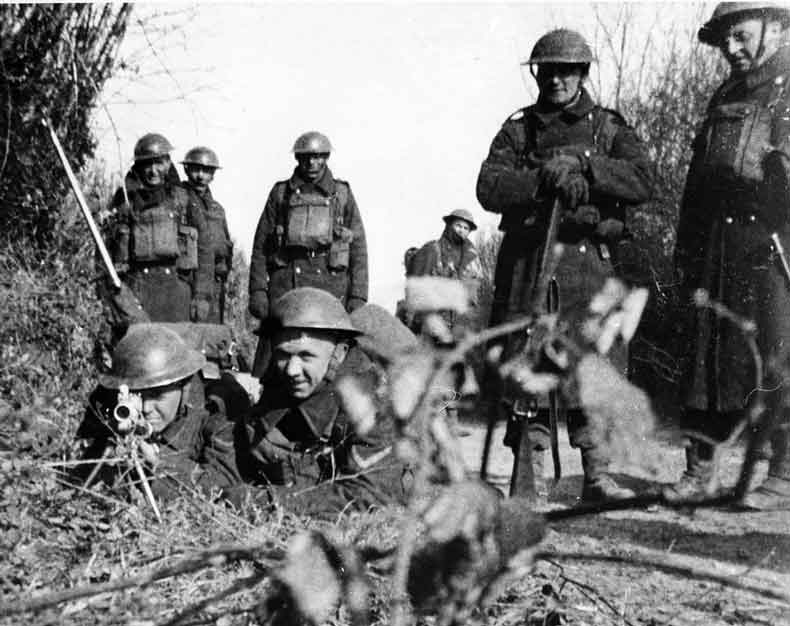
Self (C. Couldry) showing off with Bren Topham
No.2
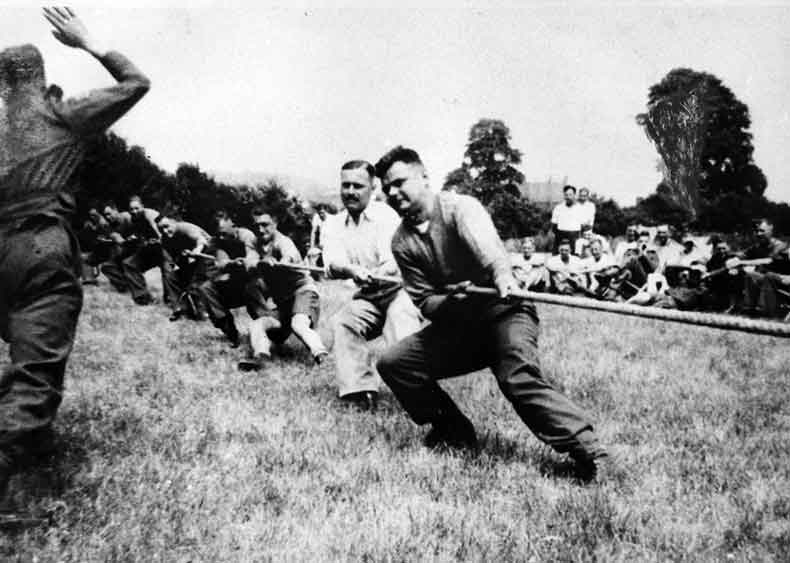
14 Platoon winning Tug O'War
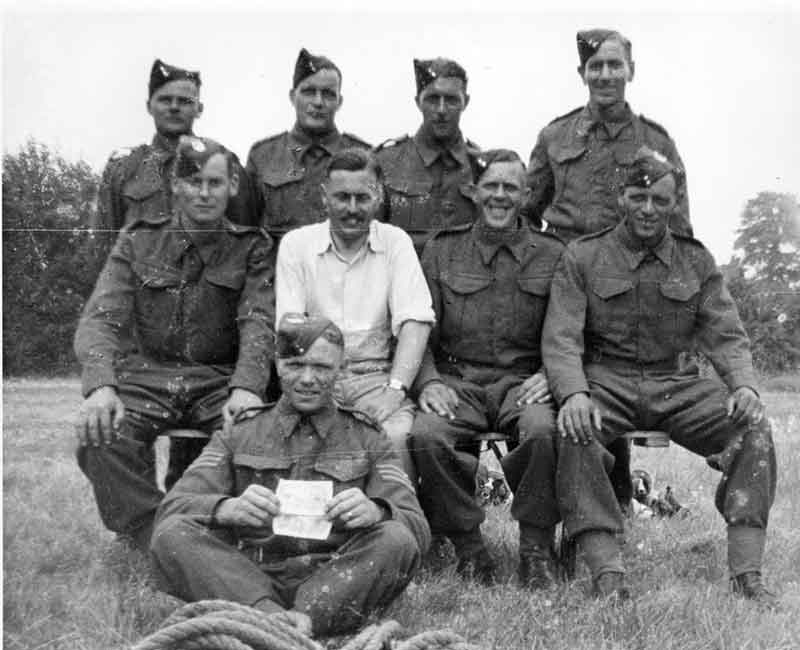
The winners: L to R:
Back row: Danasavage, Higby, Kelly, ?
Front Row: Hawkins, Lt ?, Compton, Brown &
Ogery Wright (coach)
Front: ?
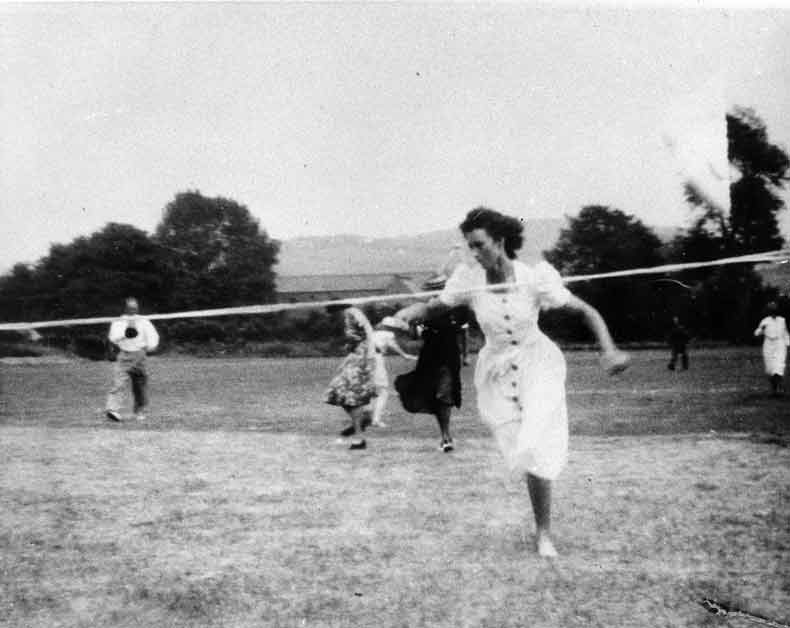
Miss Stevens (Rosemary ?) winning egg & spoon
race (little darling). CSM M.Murton with megahorn
(not needed!!)
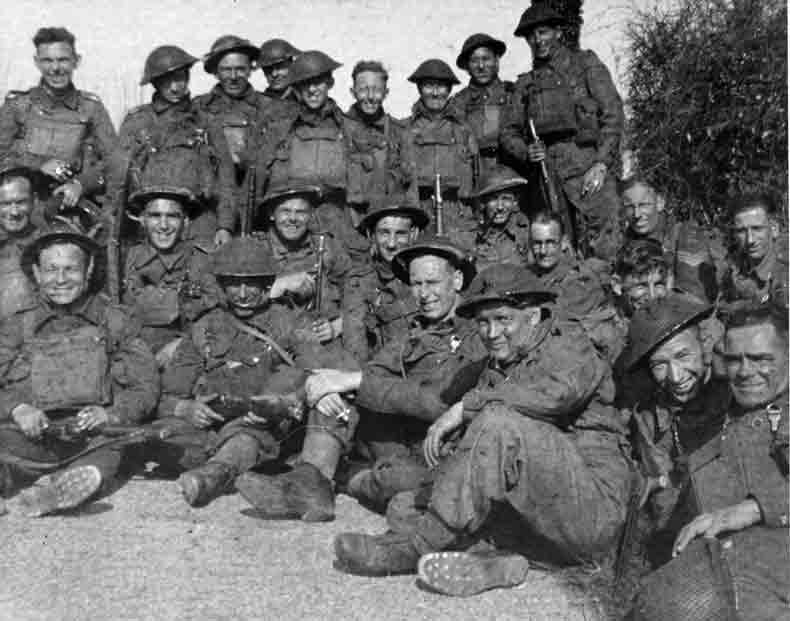 10 minute btreak on route march.
Back row - from left: ?, ?, ?, Bill Pudifoot, ?
Nobby Clark, Paul Maunison, ? O'Donnel
Middle row: ? ? Danasavage, rest in row unknown
Front row: Sgt. Davies, Sgt. Jay, Lt. Gatward,
Higby, ? Casey
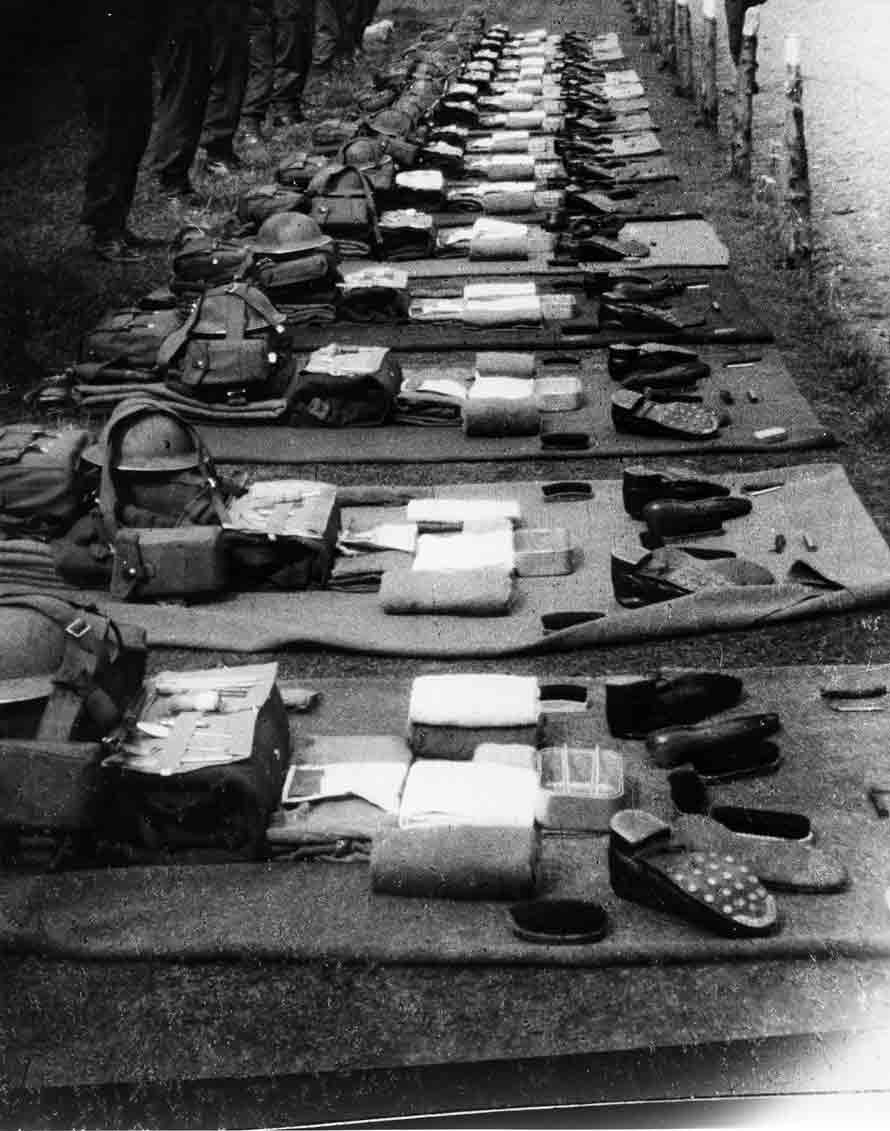
Kit at Parnham House for the general (Monty!)
Photographs
and memories from Janet Guppy on men
from the Essex Regiment. Some moving stories!
The Durham Light Infantry:
Apart from the few photographs below, we were lucky enough
to come across a book on the Durham Light Infantry which included
references to their time in Dorset. Included in the book is
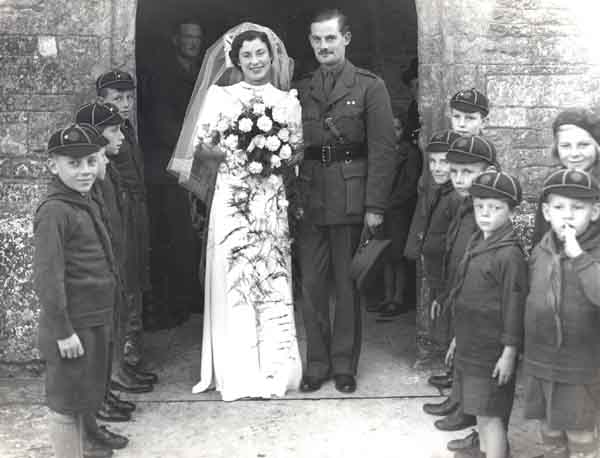
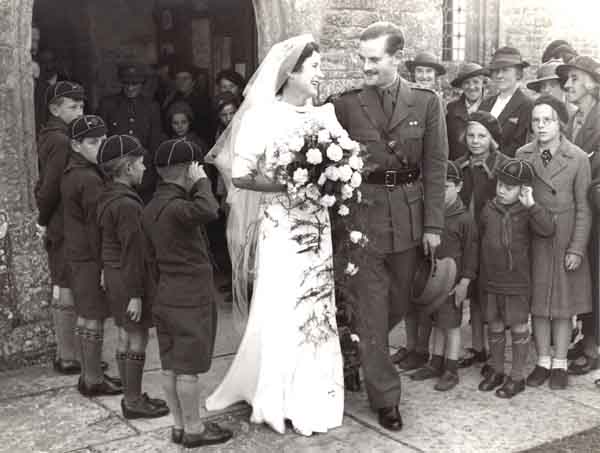
an article on how Captain Ronnie Cummins won his Military Cross
(see his wedding photo's below)
|